
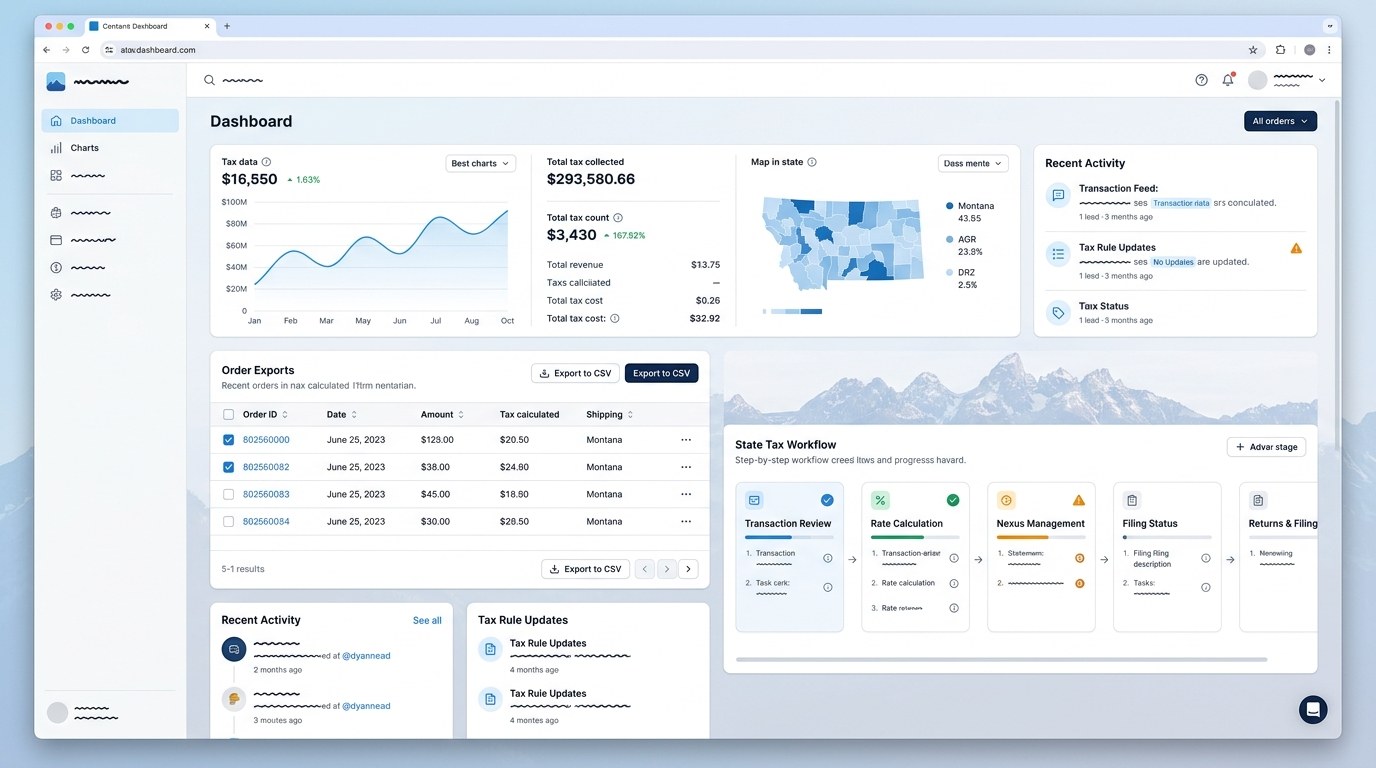
Montana does not have a general-use statewide sales tax.
Certain resort areas and lodging transactions can have separate taxes.
Montana should still be documented in your multistate nexus map.
Quick answer for ecommerce sellers.
Montana is one of the states that does not impose a general statewide sales tax on ordinary retail sales. For a remote ecommerce merchant, that usually means there is no standard Montana sales tax registration and recurring statewide sales tax return to prepare in the same way there would be for a state such as Virginia, Vermont, or Texas.
That does not mean Montana should be ignored. Montana can still appear in sales tax operations because vendors ask for resale certificates, travel or lodging activity can trigger separate tax rules, and certain resort communities or resort areas impose local resort taxes. A good compliance system should mark Montana clearly as a no-general-sales-tax state while still preserving notes about exceptions.
What creates Montana sales tax nexus?
For standard ecommerce sales of taxable goods shipped to Montana customers, Montana does not have a general sales tax nexus rule like the remote-seller thresholds in many other states. The practical nexus question is usually whether the business has a different Montana tax issue, such as lodging, rental vehicle, resort-area sales, income tax, withholding, or another business tax.
- General ecommerce sales: Montana does not require a standard statewide sales tax collection workflow for ordinary retail sales.
- Resort-area activity: local resort taxes may apply in designated resort communities and areas, generally on lodging, restaurants, bars, recreational facilities, and luxuries sold in the resort area.
- Lodging activity: Montana administers lodging facility sales and use taxes for hotels, motels, vacation rentals, campgrounds, and short-term rental marketplace activity.
- Resale documentation: Montana businesses may use the Montana Business Registry Resale Certificate with vendors, but it is not a Montana sales tax permit.
- Other taxes: contractors, hospitality operators, employers, and businesses with physical operations may have non-sales-tax obligations.
How Montana should be documented in your state map.
Montana should be coded differently from recurring filing states. Instead of assigning a monthly or quarterly sales tax filing cadence, document why the state is inactive for standard retail sales tax and what exceptions the team should review if business activity changes.
Useful notes include whether the company has Montana inventory, employees, events, lodging sales, marketplace activity, resort-area sales, or resale certificate requests from suppliers. This avoids the two common mistakes: creating unnecessary sales tax work or ignoring a separate tax that is not part of the normal sales tax return calendar.
Collection, marketplace sales, and local exceptions.
Most marketplace and direct ecommerce orders shipped to Montana do not need Montana statewide sales tax collection because there is no general-use sales tax. However, a team should still review product type and activity. Lodging, accommodations, short-term rentals, and sales inside certain resort areas can require different treatment.
- Direct ecommerce orders: preserve Montana sales totals for nexus analytics and customer-state reporting, but do not push them into a standard Montana sales tax return queue.
- Marketplace orders: marketplaces may report Montana destination sales even when no statewide tax is collected; keep those reports for reconciliation.
- Resort taxes: if the business sells taxable luxuries or covered services in a resort area, review local rules before assuming no tax applies.
- Lodging taxes: accommodations and short-term rental marketplace rules are separate from ordinary retail sales tax.
- Vendor resale requests: use the Montana resale certificate workflow when suppliers need documentation.
How to prepare a Montana filing packet.
For a standard remote ecommerce merchant, the filing packet is often a no-filing support packet rather than a return. The goal is to explain why Montana is excluded from the standard sales tax calendar and to preserve evidence for the decision.
- Export Montana sales: pull exact-period orders, refunds, marketplace totals, and customer destination data.
- Confirm business model: note whether the seller has ordinary retail sales, lodging, rental, resort-area activity, or another Montana-specific issue.
- Separate marketplace sales: keep marketplace reports apart from direct-channel orders for clean reconciliation.
- Document the tax position: record that Montana does not have a general-use statewide sales tax for ordinary retail sales.
- Flag exceptions: route lodging, accommodations, rental vehicles, resort-area, or physical-presence questions to review.
- Save the file: keep the source exports, notes, reviewer approval, and any official links used for the period.
Risk controls for Montana.
The main Montana risk for ecommerce operators is not usually a missed statewide sales tax return. It is misclassification. A team may accidentally create filing tasks that do not belong, or it may incorrectly assume that every Montana activity is exempt from tax review.
Before closing a period, confirm these points:
- Is Montana excluded from the standard sales tax return calendar?
- Were lodging, short-term rental, rental vehicle, or resort-area sales reviewed separately?
- Are resale certificate requests handled with the correct Montana documentation?
- Do Montana totals remain visible in the broader state sales map?
- Was the no-general-sales-tax position approved and saved?
Montana sales tax FAQ.
Does Montana have a statewide sales tax?
No. Montana does not have a general-use statewide sales tax.
Do ecommerce sellers need a Montana sales tax permit?
For ordinary remote retail sales, Montana generally does not require a standard statewide sales tax permit because there is no general sales tax.
Can Montana still have local taxes?
Yes. Certain resort communities and resort areas may have local resort taxes, and lodging activity has separate tax rules.
What should merchants save for Montana?
Save Montana sales totals, marketplace reports, exception review notes, resale documentation, and the reason Montana is excluded from recurring sales tax filing.
Official Montana resources to check.
Need help making Montana sales tax work repeatable?
AtomicTax prepares filing-ready sales tax packets from ecommerce reports, separates marketplace and direct-channel activity, and helps merchants keep each filing period reviewable.